In This Guide
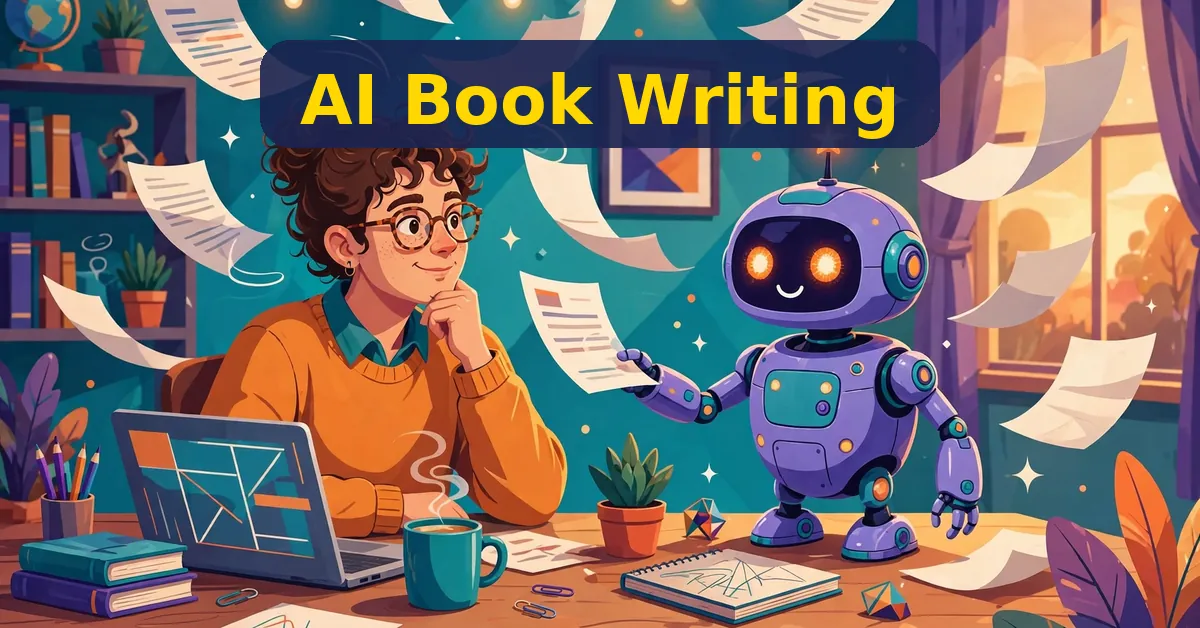
AI book writing is no longer science fiction. Thousands of authors now use AI assistants to plan, draft, and polish books. But the gap between “AI helped me write” and “AI wrote it” matters — for quality, for readers, and for Amazon’s rules. This guide explains how AI book writing actually works in 2026: the workflow, the best tools, the mistakes to avoid, and where a structured system helps. If you write history books specifically, there is a purpose-built workflow worth knowing about.
Can AI Write a Whole Book?
Technically, yes. Practically, not well. An AI can generate 50,000 words on a topic. But without structure, those words drift — characters change names, timelines contradict themselves, facts get invented. The authors who succeed with AI book writing treat the AI as a drafting partner, not an author. They plan the book, feed the AI structured prompts chapter by chapter, verify everything, and edit heavily. The result reads like a human book because a human directed every step.
Amazon KDP also requires disclosure. If your book contains AI-generated content, you must declare it during publishing. AI-assisted books are allowed; undisclosed AI content can get your account flagged. Honesty here is not optional.
The AI Book Writing Workflow
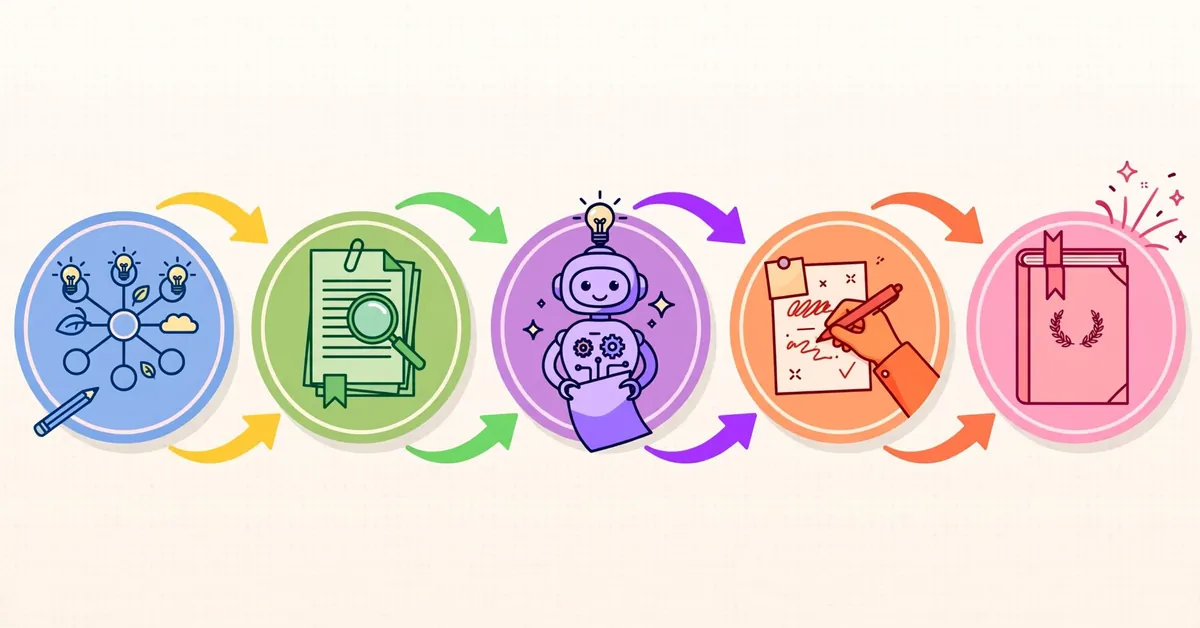
A reliable AI book writing workflow has five phases. First, planning: define the book’s promise, audience, and chapter structure before touching the AI. Second, research: gather facts, sources, and reference material yourself — AI should not be your primary researcher. Third, prompted drafting: feed the AI one chapter at a time with context from previous chapters (this “context lock” prevents the drift problem). Fourth, human editing: read every word, fix errors, add your voice. Fifth, formatting and publishing: prepare the manuscript for Kindle and print.
The third phase is where most authors fail. They ask the AI to “write chapter 5” with no context, and chapter 5 contradicts chapter 2. Structured prompt systems exist to solve exactly this — they carry characters, facts, and tone forward automatically.
Best AI Tools for Authors
The three main AI assistants for book writing are Claude, ChatGPT, and Gemini. Claude handles long documents well, which suits book-length projects. ChatGPT is versatile and widely used. Gemini integrates with Google’s ecosystem. All three work with Markdown-based prompt systems. For local writing, Obsidian and VS Code handle Markdown files cleanly. The tool matters less than the workflow — a good system works in any of them.
Beyond the AI itself, you need a writing app (Scrivener, Atticus, or even Google Docs), a fact-checking habit, and patience. No tool replaces the author’s judgment.
Common Pitfalls to Avoid
- Letting the AI invent facts — always verify names, dates, and claims against real sources.
- Skipping the outline — AI without structure produces rambling drafts.
- Publishing raw AI output — readers can tell, and reviews will punish it.
- Ignoring KDP’s AI disclosure requirement — declare AI-assisted content honestly.
- Expecting one prompt to write a book — chapter-by-chapter with context is the only reliable method.
- Neglecting your own voice — the best AI-assisted books still sound like their author.
Writing History Books with AI
History books are a special case. They demand factual accuracy, consistent timelines, and proper citations — exactly where generic AI prompting struggles. A purpose-built system for history makes a real difference: structured research bibles, entity registers, chapter-by-chapter context locks, and bibliography assembly. I reviewed one such system recently — a Markdown-based workflow for KDP history publishers. It earned a 3.8 out of 5 in my honest review: strong structure, fair $12.99 price, but prompt-files only (not software) and a short 24-hour refund window.
If history is your niche, read the full HistoryForge AI review for the detailed breakdown — what it includes, who it suits, and the limits you should know before buying.

Frequently Asked Questions
Is it legal to publish AI-assisted books on Amazon?
Yes, with disclosure. KDP requires you to declare AI-generated content during publishing. AI-assisted books are permitted; hiding AI involvement is not.
How long does it take to write a book with AI?
With a solid workflow, a first draft can take 2-6 weeks instead of months. Editing and fact-checking still take significant time — AI speeds drafting, not judgment.
Do I need to be a writer already?
It helps enormously. AI amplifies your existing ability; it does not create it. Authors who can already structure ideas get far better results than complete beginners.
What does AI book writing cost?
An AI subscription ($20/month typical) plus any workflow systems you buy. A purpose-built prompt system like the one I reviewed costs $12.99 one-time. Total startup cost stays under $50 for most authors.
Disclosure
This guide contains links to our own reviews, which may contain affiliate links. If you buy through them, we may earn a commission at no extra cost to you. This is editorial content based on research, not a sponsored post.