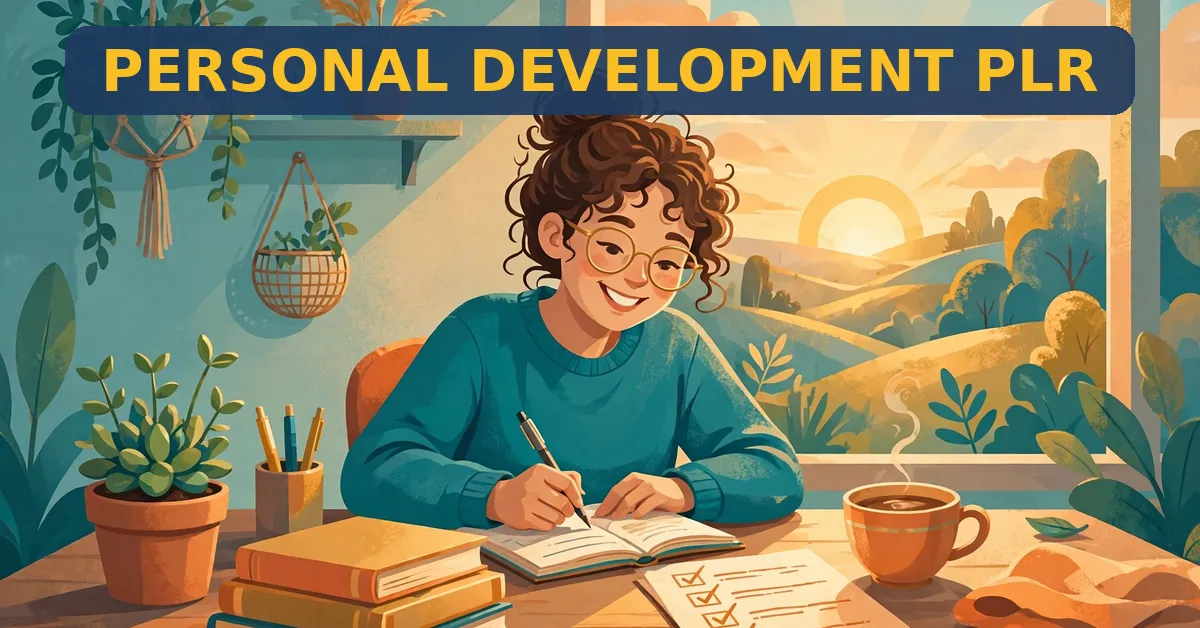
Personal development PLR is ready-made self-help content you can buy, rebrand, and sell as your own. It covers topics like goals, habits, focus, and confidence. This guide explains what it is, how to use it, and what to check before you buy. You will learn how to turn one PLR package into a journal, a habit system, a short course, or coaching material.
You do not need to be a writer to start. You need a good package, a clear plan, and a few hours to make it your own. So read on, pick one use case, and start small. If you want a real example to study, I also link to my honest review of From Ambition To Action PLR, a 12-module personal development PLR package from AbundancePrint.
Quick Answer
The short version: personal development PLR is done-for-you self-help content with a licence that lets you rebrand it and sell it. First, pick a topic people already want help with, such as habits or goal setting. Next, buy a package that includes an ebook, a checklist, and a lead magnet. Then, rewrite the cover, add your name, and fix any weak spots. Finally, sell it as a journal, a course, or a coaching tool. The licence matters most, so read it before you buy.
What Is Personal Development PLR?
PLR stands for Private Label Rights. It is a licence that comes with a content package. The licence lets you put your name on the content and sell it as your own product. Personal development PLR covers self-help topics. Common topics include goal setting, habit building, focus, time management, confidence, and morning routines.
A typical package includes a main guide or ebook. It often adds a checklist, a mind map, and a short report you can give away free. Bigger packages add a sales page, an email series, and graphics. Some now add AI tools, such as self-assessment prompts for ChatGPT, Claude, or Gemini.
Personal development PLR is not the same as a free article. You pay once for the package. Then you own the right to sell it under your brand. That is the whole point. You skip the weeks of writing and start with a finished draft.
But PLR is a starting point, not a finished product. Other buyers get the same files. So change the title, rewrite the intro, and design a fresh cover. That work turns shared files into a real product.
How Personal Development PLR Works
The process is simple. First, you buy a PLR package from a vendor. Next, you download the files. Then, you edit them in Word, Google Docs, or Canva. Finally, you upload your version to your store and sell it.
The licence sets the rules. So read the licence file inside the package before you do anything else. It tells you what you can sell, what you can give away, and what you must never do.
PLR vs Resell Rights vs Master Resell Rights
PLR is the most flexible licence. It lets you edit the content, put your name on it, and sell it as your own. You can also break it into smaller pieces. For example, you can turn one chapter into a lead magnet and sell the rest as a course.
Resell Rights are narrower. They let you sell the product as it is, but you cannot edit it or claim authorship. This suits sellers who want a quick listing with no editing work.
Master Resell Rights go one step further. They let you sell the product and pass resell rights to your own buyers. Some packages include all three licences at once, so check which certificates sit inside the package.
These licences differ from package to package. So never assume one package allows what another allowed. Read each licence file on its own. If a right is not listed, assume you do not have it.
What Good Personal Development PLR Includes
A good package gives you more than a wall of text. It gives you a product you can launch. Use this checklist when you shop. The more boxes a package ticks, the less work you must do.
- A main guide with clear chapters and action steps at the end of each chapter.
- A checklist that sums up the whole system on one or two pages.
- A mind map that shows the full method at a glance.
- A lead magnet report you can give away to build your email list.
- A sales page and a thank-you page in editable HTML.
- An email series that follows up with new subscribers.
- A graphics pack with covers, mockups, and banner ads.
- Editable source files, such as DOC files and layered PSD graphics.
- Licence certificates that state your rights in plain words.
Extras can add real value too. A video sales letter helps you sell on a sales page. AI prompts turn a passive ebook into an interactive tool. A challenge report, such as a 7-day plan, gives buyers a quick win in their first week.
Watch the word count as well. A main guide of 10,000 words or more gives you enough depth to split into chapters, lessons, or journal prompts. A short guide can still work as a lead magnet, but it rarely supports a paid course on its own.
Five Ways to Use Personal Development PLR
One package can become many products. The trick is to match the format to the buyer. A busy reader wants a journal. A coach wants worksheets. A course buyer wants video lessons.
1. Turn It Into a Journal
Journals are the easiest first product. Take the guide’s action steps and turn each one into a daily prompt. Then design a simple cover in Canva and sell the journal as a PDF or a printable. Buyers love journals because they use them every day.
2. Build a Habit System
A habit system turns advice into a daily routine. Pull the habit chapters out of the guide. Then build a tracker, a weekly review sheet, and a 30-day challenge around them. Habit buyers want structure, not more theory. So give them boxes to tick and a streak to protect.
3. Turn It Into a Short Course
A course earns more than a single ebook. Split the guide into six to twelve lessons. Record a short video or audio lesson for each one. Then add a worksheet per lesson. Keep each lesson under ten minutes. Short lessons get finished, and finished courses get good reviews.
4. Use It for Coaching Content
Coaches can use PLR as client material. Turn the self-assessment into an intake form for new clients. Turn each chapter into a session worksheet. Then use the AI prompts to help clients build a personal plan between sessions. Just make sure the licence allows client use before you hand the files out.
5. Use It as a Lead Magnet
A lead magnet builds your email list. Take the shortest useful piece of the package, such as a 7-day challenge report. Offer it free in exchange for an email address. Then use the included email series to follow up and introduce the full paid guide.
How to Turn PLR Into a Journal

A journal works best when it feels personal. So start with the reader, not the text. Ask one question: what will the reader write each morning? Then build the whole journal around that one daily habit.
First, pick three prompts from the guide. Good prompts are short and open. For example, ask what the reader wants today and what one win looks like. Next, put one prompt at the top of each journal page. Then, leave plenty of blank lines below it.
Add a weekly review page after every seven daily pages. The review asks three questions. What worked this week? What did not work? What will change next week? This page turns daily notes into real progress.
Finally, design the cover with care. Use one strong image, a clear title, and your brand name. Keep the inside pages clean, with wide margins and a readable font.
How to Build a Habit System From PLR
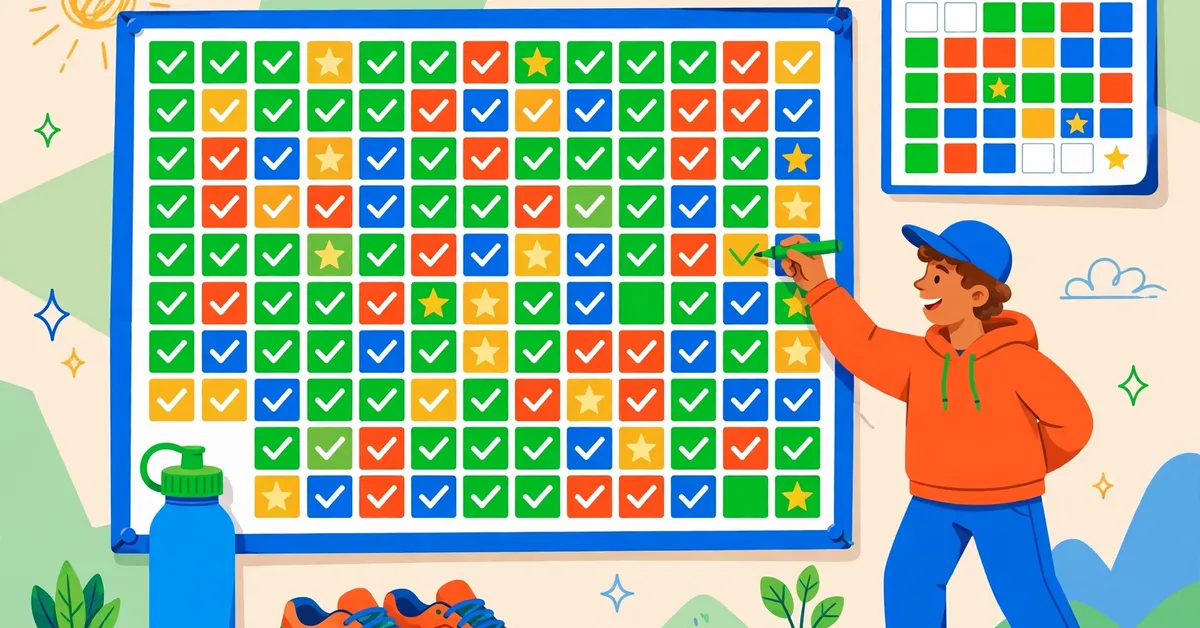
A habit system has three parts: a tracker, a rule for low-energy days, and a restart plan. Most PLR guides already cover all three. Your job is to pull them out and make them usable in one minute a day.
First, build the tracker. Make a grid with seven boxes for the week and one row per habit. Keep it to three habits at most. Three habits fit on one page and feel doable. Ten habits feel like homework, so buyers quit by day three.
Next, write the low-energy rule. Every guide has a section on bad days, so find it and make it a page of its own. The rule should be simple: on a low-energy day, do the smallest version of the habit. A five-minute walk counts. One written line counts.
Then, write the restart plan. A missed day is normal, so plan for it in advance. The plan says: after a miss, run the shortest version the next morning. Never miss twice in a row. This one rule saves more habits than any motivational quote. Put it on the first page of the tracker so buyers see it before day one.
How to Use PLR in Coaching

Coaching turns PLR into a service, and a service earns more than a file. The content does the teaching, so you can spend session time on the client. That is the real value for a busy coach.
Start with the self-assessment. If the package has one, use it as your intake tool. Send it to new clients before the first session. Their answers show you where they stall. Then you can plan session one around their weakest area instead of guessing.
Next, turn each chapter into a session worksheet. One chapter equals one session. Add three questions per worksheet. What is the goal? What is the first step? What could block it? Clients fill the sheet in the session, then take it home as homework.
Then, use the AI prompts between sessions. Give clients one prompt per week to run in ChatGPT, Claude, or Gemini. Ask them to bring the result to the next session.
Licensing Pitfalls to Check First
Licensing is where new PLR sellers make their worst mistakes. The rules are simple, but they are strict. So check these five pitfalls before you list any product for sale.
First, never claim you wrote the original text. PLR lets you put your name on the product, but it does not make you the original author. Rebrand it, rewrite parts of it, and sell it as your version. Do not claim copyright over the raw files as if you wrote every word.
Second, never give PLR rights to your buyers unless your licence allows it. Some licences let you sell the product, but not the rights. If you pass rights you do not hold, you break the vendor’s terms. So check the certificate before you offer any rights upgrade.
Third, never list the product on a free giveaway site unless the licence allows free distribution. Many licences allow paid sales only.
Fourth, never use the vendor’s name or brand in your ads without permission. Some vendors ban paid ads that use their product name. Others ban ads that bid on their brand terms. Read the JV terms or the licence file, and keep your ads under your own brand.
Finally, never skip the licence file itself. It sits inside the download, often as a PDF or a text file. Open it, read it once, and save a copy with your product files. Five minutes of reading now can save you a dispute later.
What to Look For Before You Buy
Not all PLR is worth your money. Some packages are thin, dated, or full of errors. So judge every package on five points before you buy.
First, check the vendor. A vendor with a public JV page, a real product list, and years of releases is a safer bet than a stranger with one listing. Look for fixed launch dates and clear module lists.
Second, read a sample if one exists. A short preview shows you the writing quality in seconds. Look for short sentences, clear steps, and real examples. If the sample is vague, the full guide will be too.
Third, count the modules. A package with a guide, a checklist, a mind map, a lead magnet, and a sales page saves you weeks. A package with one short ebook saves you almost nothing.
Fourth, check the guarantee. Some vendors state a money-back guarantee on the sales page. Others state none at all. If no guarantee is stated, treat the purchase as final. Check the checkout page before you buy, and set a firm budget first.
Fifth, check the price path. Launch prices often rise during the launch week and again after it ends. So check the live price at the time you buy, not the price in an old review.
A Real Example: From Ambition To Action PLR
A real example makes the advice concrete. So here is one package I have reviewed in full: From Ambition To Action PLR. It is a personal development PLR package from Yu Shaun and Cally Lee, who run the AbundancePrint brand. My honest review rates it 4.5 out of 5.
The front end has 12 modules. The core is a 10,000+ word blueprint that teaches readers to pick just three priorities at a time. The package calls this the Active Three. Then it turns each priority into a small daily action the reader controls. The guide comes in editable DOC and PDF, with chapter graphics.
Two AI tools stand out. The AI Self-Assessment has 40 statements across eight key areas, with a scoring guide and a 30-day reassessment. The AI QuickStart has five guided exercises with copy-and-paste AI prompts, plus a first seven days plan.
The package also ships the full selling system. You get a sales page and a thank-you page, a video sales letter, a landing page, an email series, and a graphics pack with layered PSD sources. The lead magnet is a 4,000+ word special report called 7-Day Challenge to Stop Feeling Overwhelmed by Big Goals and Start Moving.
The licence is generous. The package includes PLR, Resell Rights, and Master Resell Rights certificates. So you can rebrand the guide and sell it under your own name. Just check the certificates before you pass rights on.
Two honest catches matter. First, no money-back guarantee is stated on the vendor JV page. Second, the launch ends on November 10, 2026, and the price rises as the launch runs, so check the live price before you buy. My full review covers the whole funnel, the pros and cons, and who should buy it. Read it before you decide.
If you want a second personal development angle, look at morning routines too. My review of Own Your Morning PLR covers a 12-chapter morning-routine course with full PLR. A morning routine is one of the easiest personal development products to turn into a journal or a habit system, so the two topics pair well.
Common Mistakes With Personal Development PLR
Most PLR products fail for the same few reasons. The good news is that each one is easy to fix. Here are the traps to watch for.
First, do not sell the files as you downloaded them. Every other buyer has the same files. So spend one evening on rebranding. Change the title, the cover, and the intro at minimum.
Second, do not skip the editing pass. PLR text often has long sentences and dated examples. Read the whole guide once. Cut the filler, fix the errors, and add one story of your own per chapter.
Third, do not pick a topic with no buyers. A clever niche with no demand will not sell, no matter how good the content is. Check the demand first.
Fourth, do not build five products at once. One good journal beats five half-finished bundles. Finish one product, list it, and get your first sale.
Finally, do not ignore your buyers after the sale. Ask for feedback. Fix the weak spots they report. A product that improves over time earns repeat buyers and good reviews.
Frequently Asked Questions
What is personal development PLR?
Personal development PLR is ready-made self-help content with a Private Label Rights licence. You can rebrand it, put your name on it, and sell it as your own product. It covers topics like goals, habits, focus, and confidence. Typical packages include a guide, a checklist, a mind map, and a sales page.
Can I sell PLR as my own product?
Yes, if the licence allows it. A PLR licence lets you rebrand the content and sell it under your own name. Resell Rights and Master Resell Rights work differently, so read the licence file inside the package first. Other buyers hold the same licence, so your branding and marketing decide your results.
How do I turn PLR into a journal?
Pick three prompts from the guide and put one at the top of each daily page. Leave blank lines below each prompt for writing. Add a weekly review page after every seven daily pages, plus a monthly score page. Then design a clean cover and sell the journal as a PDF or a printable.
Is personal development PLR worth it for beginners?
Yes, if you pick one use case and finish it. A journal is the best first product because it needs no video skills and no long sales page. Start with one package, rebrand it in a weekend, and list it. Do not buy five packages before you sell your first product.
What should I check before buying PLR?
Check the licence file, the module list, the vendor, and the guarantee. Make sure the licence allows what you plan to do, such as coaching use or passing on resell rights. Check the live price too, since launch prices rise during the launch. If no guarantee is stated, treat the purchase as final.
My Personal Verdict
Personal development PLR is a fair shortcut, not a magic sale. It saves you weeks of writing, but it cannot save you from the rebranding work. My advice is simple: buy one good package, turn it into one journal or habit system, and finish it. That first finished product teaches you more than five unread downloads. If you want a strong package to start with, read my review of From Ambition To Action PLR first. It rates 4.5 out of 5, and it shows exactly what a complete package looks like, catches included.
Affiliate Disclosure
This guide contains no affiliate links. It links to my own reviews of From Ambition To Action PLR and Own Your Morning PLR. Those reviews contain affiliate links. If you buy through them, Pickzox may earn a commission at no extra cost to you. I only recommend products I have researched honestly, and each review lists the real cons alongside the pros. Prices change over time, so check the live listing before you buy.